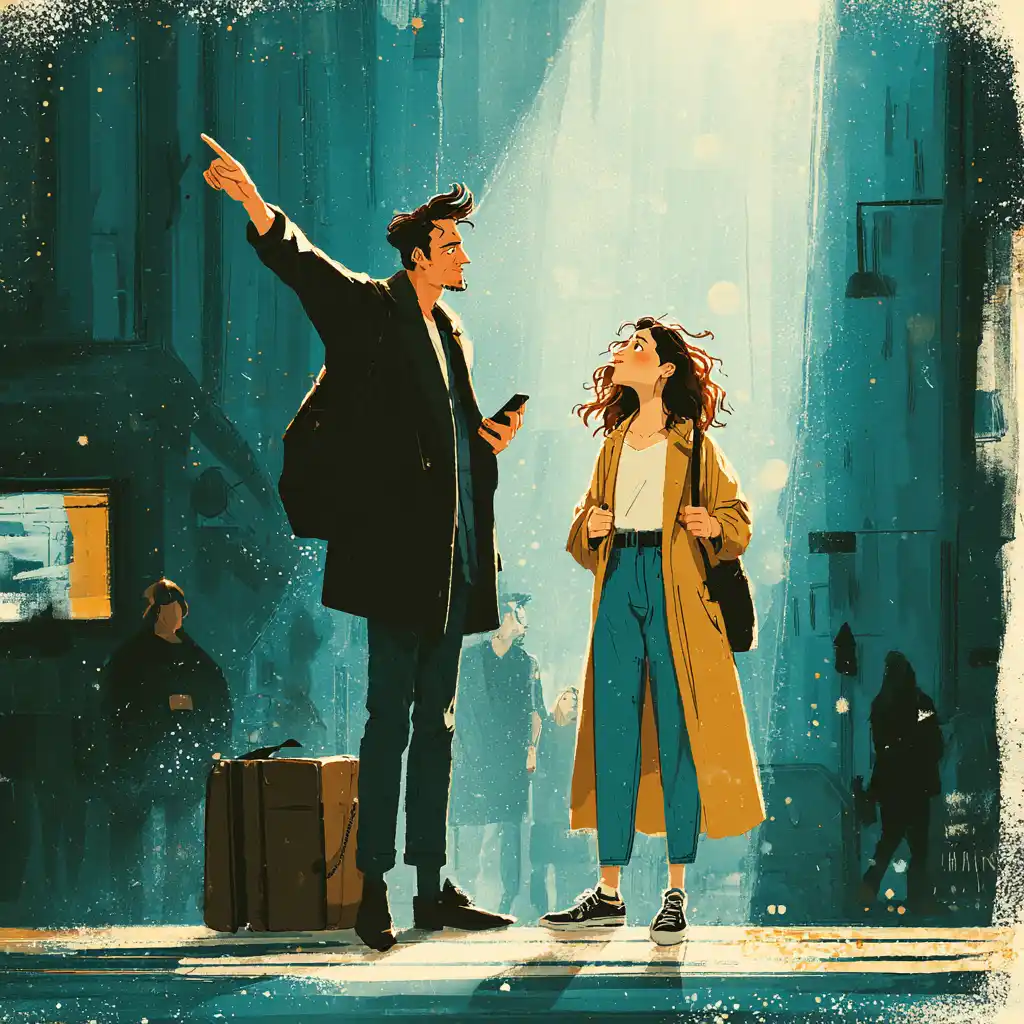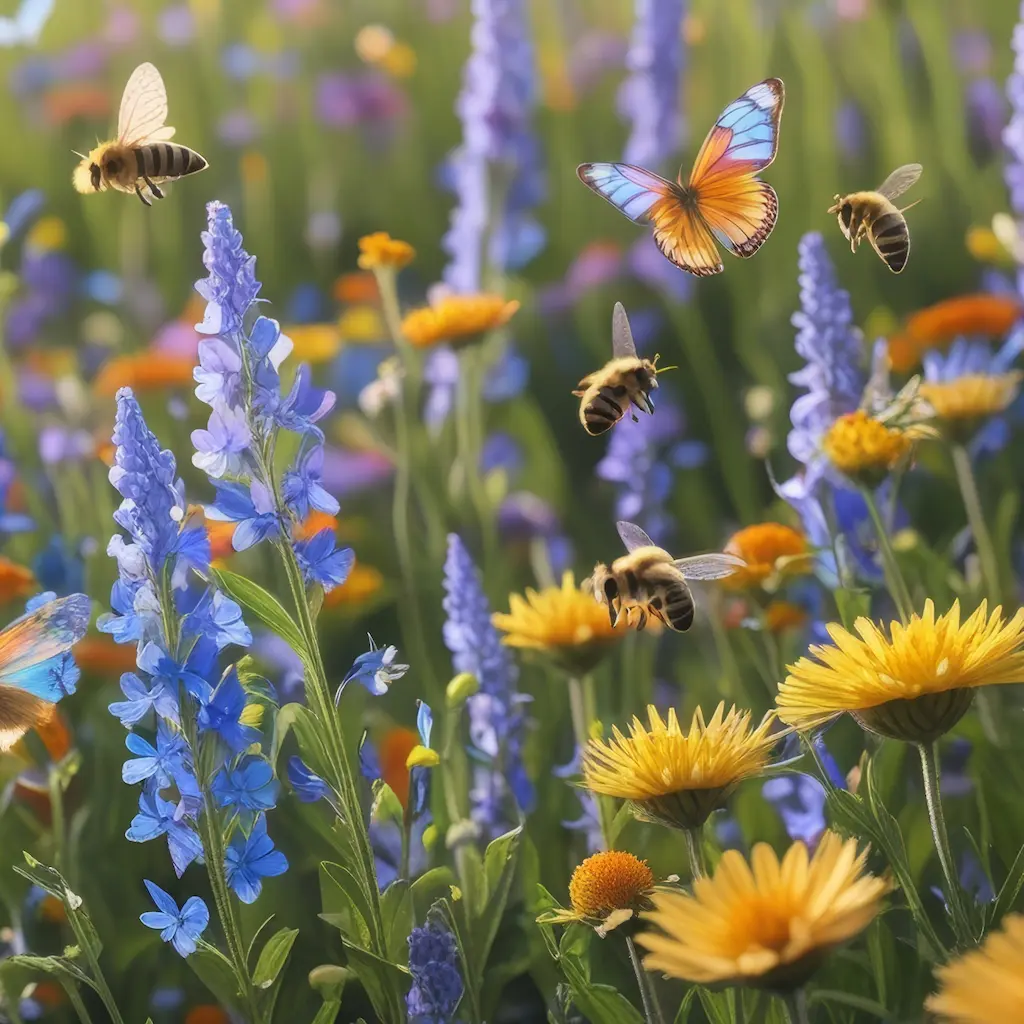
Imagine you find a field full of flowers. You want to tell your friends where it is, but you cannot speak, you cannot write and you cannot draw a map. What do you do?
Bees found an answer a long time ago. They dance.
Tens of thousands of bees live together in one hive, and a family that big needs a lot of food. So some bees fly out to look for flowers. We call them worker bees, and they are all female. They collect nectar, and the bees make honey from it. They also collect pollen, which is food for the young bees in the hive.
One bee flies out alone and searches. Then she finds it: a lot of good flowers in one place. She remembers where it is, takes some nectar and pollen, and flies home.
Now she has to explain what she found.
Inside the hive, she starts to dance. First she walks forward in a straight line and shakes her body quickly from side to side. This part is called the waggle. Then she stops, turns to the left and walks back to the start in a half circle. She waggles along the same straight line again, but this time she turns to the right. Left, right, left, right — again and again. Scientists call this the waggle dance.
The straight line in the middle is the message. It shows the other bees which way to fly, and bees use the sun to find the direction. If the bee walks straight up on the wall of the hive, it means "fly towards the sun". If she walks to the right of that line, the food is to the right of the sun. If she walks to the left, the food is to the left of the sun. In this way, she draws a map with her body.
The dance also shows the distance. A long waggle means the food is far away. A short one means it is close. If the flowers are really good, she dances again and again, with more and more energy.
But there is a problem. It is completely dark inside the hive, so the other bees cannot watch her.
So they feel the dance instead. They stand very close to her and touch her with their antennae. They feel the movements of her body through the honeycomb under their feet. In the dark, they read her message with their bodies.
Smell helps too. The dancer still carries the smell of the flowers on her body, and the other bees remember it. The dance takes them to the right place, and the smell shows them the right flowers.
We know all this because of an Austrian scientist, Karl von Frisch. He spent years next to his hives. He watched the bees, put small spots of colour on them, and wrote down everything they did. For a long time, other scientists did not believe him. In 1973, he shared a Nobel Prize for his work on animal behaviour.
Bees do not dance only about flowers. They dance about water. And when a colony needs a new home, bees fly out, find different places, and dance about them until the group chooses one.
One bee is very small. Her brain is smaller than a grain of rice. She cannot plan, and she cannot think about the future. But these small animals tell each other what they see, and so the hive knows where to find food.
Nobody is the boss. Nobody gives orders. There is only a dance in the dark, and a hive that survives because of it.