For most of us, going to school is just something we do. We wake up, we complain a little, and we go. We do not think of it as a risk. But in some parts of the world, that short walk to the classroom can cost a child everything. Imagine leaving your house in the morning and not knowing if you will come back. For Malala Yousafzai, that was not an imaginary situation. It was her life.
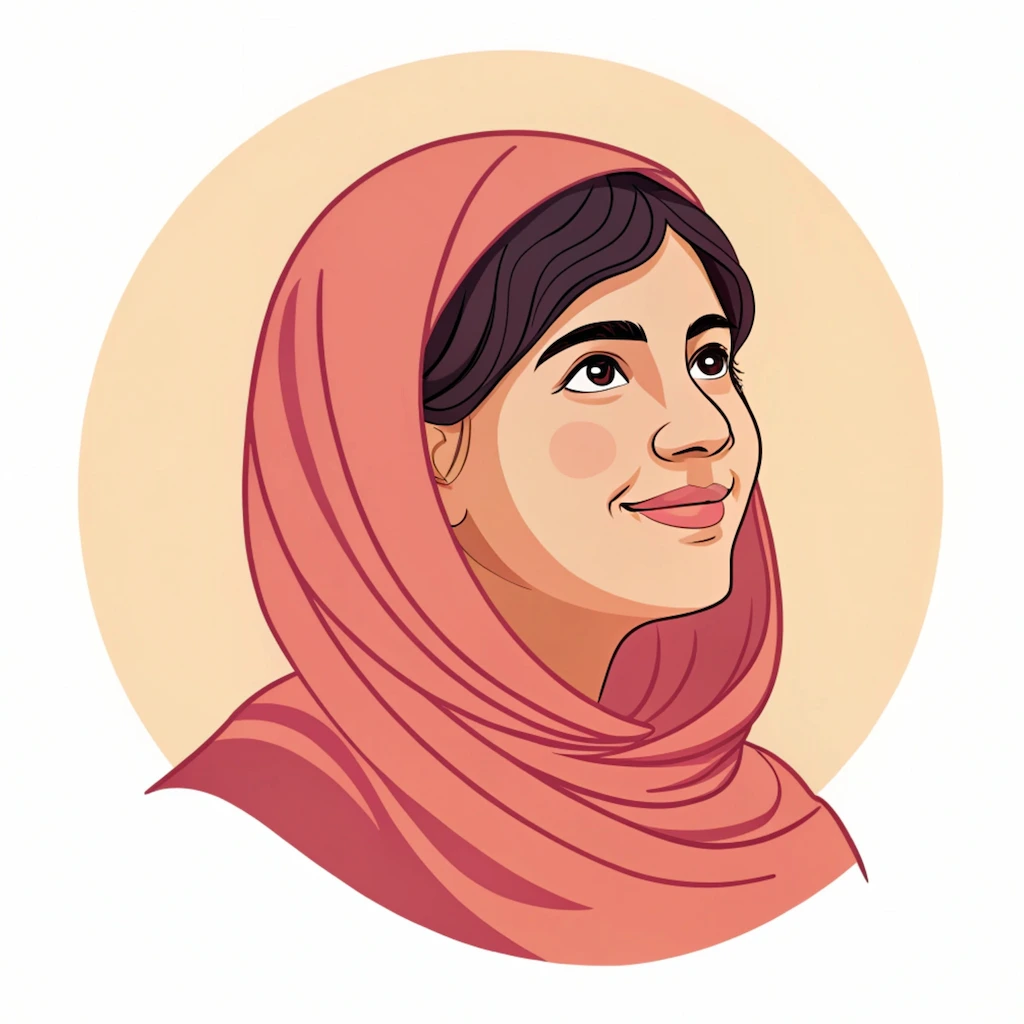
Malala was born on 12 July 1997 in Mingora, a city in the Swat Valley of Pakistan. Her father, Ziauddin Yousafzai, was a teacher who ran his own school, and books were everywhere in their home. He did something unusual for the time: he told everyone that his daughter would study, and that her mind mattered as much as any boy's. Malala loved school. She loved being first in her class.
Then the valley changed. The Pakistani Taliban took control of the area and brought strict new rules. They said that girls should not go to school. Families became frightened. One by one, girls stopped coming to class. Some never said goodbye — they simply were not there the next morning. Empty desks began to appear in rooms that had been full of noise and laughter.
Malala was only eleven when she started writing about it for BBC Urdu. She wrote under a different name to protect herself. In short, simple posts, she described what it felt like to be a girl who was told that her education was over: the fear, the silence in the streets, the uniform hanging in the wardrobe. Later, she began to speak openly, using her real name and her real face.
People listened. That was the problem. On 9 October 2012, when Malala was fifteen, a gunman stopped her school bus, asked for her by name, and shot her in the head. Her friends were sitting beside her. She was rushed to hospital, seriously injured, and later flown to Birmingham, England, for further treatment.
She survived. It took several operations and many months of recovery, and her family had to build a new life in the United Kingdom. The attack took away her home, her school and her friends. It did not take away her voice.
On her sixteenth birthday, less than a year later, Malala stood in front of the United Nations and asked world leaders to make education possible for every child. She was still a teenager, still recovering. She explained that the attack had not silenced her. Instead, it had made her even more determined to continue her work. The room listened, and so did the world.
With her father, she created the Malala Fund. The organisation supports girls' right to finish secondary school. It works with local activists who already know their communities, and it pushes governments to change their education policies. Its work reaches places where poverty, war and discrimination still keep girls at home.
In 2014, at seventeen, Malala received the Nobel Peace Prize together with the Indian children's rights activist Kailash Satyarthi. She became the youngest person in history to win it. But she kept saying the same thing in interviews: the prize was not the end of anything. It was a tool.
She also did something quietly beautiful — she went back to school. In 2017, she began studying Philosophy, Politics and Economics at the University of Oxford, and she finished her degree in 2020. In the photographs from that day, she looks like any other happy graduate. For a girl who was shot for wanting a classroom, it was the most powerful answer she could give.
Today Malala still campaigns through the Malala Fund. She meets students, teachers and activists all over the world. More and more, she steps back and gives the microphone to other girls, so that they can tell their own stories instead of having someone else tell them.
It is easy to turn her life into the story of one extraordinary person. But Malala never wanted to be the only one. Behind her name there are millions of girls whose names we will never learn — girls stopped by war, by poverty, by rules written long before they were born.
Her story reminds us that education is not really about lessons, tests and certificates. It is about having some control over your own future. Malala could not solve this problem alone, and she has never claimed that she could. What she did was refuse to be quiet — and that gave other people permission to speak too.